
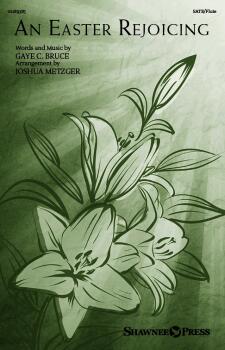
This stunning anthem sings Easter praise with a noble theme and sturdy traditional harmonies. Strong unison singing and reasonable vocal ranges make this majestic song easy to learn and perform, enabling your choir to share the miracle of resurrection with a festive flourish.
MORE»
List: 2.75

This work for cello and piano was composed by the famed Ukrainian composer in 2005.
MORE»
List: 19.99
'Echo' is the third movement of 'Seascapes', which was commissioned by the BBC Singers, as companion music to the 'Four Sea Interludes' by Benjamin Britten, arranged for the organ by Anna Lapwood. It was premiered at Temple Church by the BBC Singers, conducted by Ben Palmer, on 7 October. The four movements of 'Seascapes' take the four Britten movements as inspiration, seen through the prism of Arakelyan's musical language. Ranging from the painful lyricism of the third movement, Echo, to the wild energy of the final movement, Storm Wind, the musical syntax, including the melodies, structure and tonal centres are presented as a homage. The poems by Christina Rossetti were chosen to reflect the narrative themes of Britten's opera 'Peter Grimes', from which the 'Four Sea Interludes' are taken. The compositions can be paired with the Four Sea Interludes or performed as standalone pieces.
MORE»
List: 2.80
Based on time-honored text and tune, this anthem is a quintessential Easter opener. Allowing both your choir and congregation to participate, this is an introit or call to worship you can use throughout Eastertide. Solid part-writing, a sturdy piano accompaniment, and instrumental ensemble options complete the package.
MORE»
List: 84.95
A collection of early pieces, issued in collaboration with the Bliss Trust to mark the 50th anniversary of the composer's death. Preface by Giles Easterbrook, an unswerving advocate of Bliss's music, including an article on 'Bliss and the Piano', and commentary on the works, placing them in the context of his development as a composer.
MORE»
List: 56.00
It does not always have to be Sarasate - the “Carmen Fantasy” by Hungarian violin virtuoso Jenö Hubay is also well worth discovering! Composed in 1876/77, it is considered an early example of his masterful operatic transcriptions. Hubay combined the best-known themes from Georges Bizet's opera - Habanera, Micaëla's aria, the Toreador March - into a colourful showpiece for the violin.
Henle Horizons Series
MORE»
List: 19.95
This Hal David and Burt Bacharach hit from 1964 is instantly recognizable with nostalgic lyrics and a gentle '60s groove. Easy-to-learn and easy-to-sing, it will bring smiles to the audience!
MORE»
List: 1.50
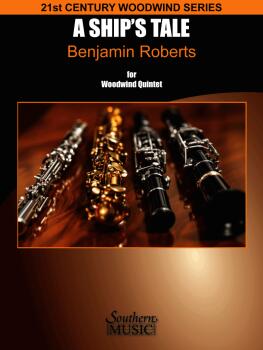
This piece, inspired by traditional sea shanties, spreads three different moods across three movements. The first movement (“Out to Sea”) was written in 6/8 to musically depict what it would feel like to be on a ship rocking back and forth as it leaves port. The second movement (“Tides of Midnight”) is comprised of two sections: the first, slower section is the presentation of calm waters and the tranquil night while the second, more playful, represents the joy and freedom sailors felt while out on the open sea. The final movement (“Ambush!”) illustrates the dangers the crew members and sea vessels faced daily. Towards the end of the piece, the original melody can be heard once again, bringing with it a sense of familiarity and finality, as the sailors' journey comes to a close.
MORE»
List: 29.99
A setting of Christina Rossetti's poem Dream Land, the raw emotional quality of Dreamland reflects on the beautiful imagery and themes of fantasy and death of the poem. Written in the Autumn of 2020, at the height of the pandemic, the difficulties of those months are reflected in the sorrowful and transcendent nature of the melodic lines, which are supported by a flowing piano line. Although it was imagined as a song, initially Dreamland was called 'Rhapsody' and written as a ballet score for piano and wind quintet. Versions for piano solo and organ solo also exist.
MORE»
List: 2.80
Program Note by Warren Benson: “Contrast defines the Concertino. From a simple beginning, each of the solo flute sections builds to a free virtuosic statement against the rather stark, dramatic background of insistent, distant percussion pulsing. The alternating full ensemble sections are bound together by a set of four variations which treat the dancy or lyrical aspects of the material. They recur two times in various additional disguises, making twelve in all - divided unevenly into three groups. The contemplative closing variation is characterized by a slowly rocking viola motive over which the solo flute weaves the final echoes of the lyric voice before moving to its final soliloquy. Commissioned by Flute virtuosa Bonita Boyd, the work was completed in 1983 and had its premiere in Los Angeles in December of that year.”
MORE»
List: 34.99
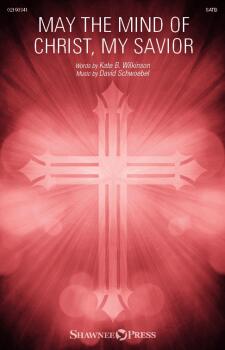
This winsome blessing joins several New Testament scriptures into a poetic prayer for God's presence in our lives. A beautiful theme carries the words gently to the heart, while the flowing piano accompaniment paints soft colors and flowing patterns. A warm and encouraging closing piece for any service.
MORE»
List: 2.75
Dynamic and texturally rich, this piece challenges three players with rhythmic drive, inventive timbral contrasts, and focused ensemble interplay. Performers will develop mallet technique, auxiliary percussion color, precise coordination, and expressive dynamic control qualities ideal for university recitals, chamber concerts, and percussion ensemble programs. The music emphasizes interplay between individual virtuosity and collective texture, offering rewarding rehearsal and performance opportunities for advancing percussionists and chamber groups. For precise ensemble performance, it is suggested that each player use a complete score.
MORE»
List: 22.99